
Views: 0 Author: Site Editor Publish Time: 2025-09-01 Origin: Site


In today’s industrial landscape, sustainability and environmental stewardship have become paramount concerns. As industries strive to reduce their ecological footprints, solid lubricants have emerged as a crucial technology offering significant environmental advantages over traditional fluid-based lubricants such as oils and greases.
Lubrication is essential for reducing friction and wear in machinery, but conventional lubricants, predominantly oils and greases, pose serious environmental challenges. These include contamination from leaks and spills, difficulties in disposal, and energy-intensive manufacturing processes. As regulatory pressures tighten and corporate sustainability goals become stricter, there is a growing demand for lubrication solutions that minimize environmental harm without sacrificing performance.
Solid lubricants represent a promising alternative. Their unique properties allow for maintenance-free, long-lasting lubrication without the risks of fluid leakage or volatile organic compound (VOC) emissions. Let’s explore how solid lubricants contribute positively to environmental sustainability.
One of the most significant environmental concerns with traditional lubricants is the potential for leaks, spills, and improper disposal. Lubricating oils can contaminate soil and water, posing risks to ecosystems and human health. Such contamination incidents are often costly to remediate and can lead to regulatory fines.
Solid lubricants, by contrast, are inherently non-fluid and thus do not leak or spill. Applied as coatings, powders, or embedded materials, solid lubricants form stable films that remain on surfaces under a wide range of operating conditions. This eliminates the risk of environmental contamination from lubricant loss, especially in sensitive or hard-to-access equipment.
Many traditional lubricants contain volatile organic compounds that evaporate during use or storage, contributing to air pollution and occupational health hazards. VOCs are significant contributors to smog formation and can adversely affect indoor air quality.
Solid lubricants do not evaporate or emit VOCs because they lack volatile carriers. Their dry-film nature means they provide effective lubrication without releasing harmful emissions. This characteristic makes them especially valuable in indoor manufacturing environments and cleanrooms, where air purity is critical.
Solid lubricants typically offer extended service life compared to liquid lubricants, reducing the frequency of reapplication and disposal. By lowering the need for lubricant replenishment and maintenance, industries generate less hazardous waste and minimize the use of packaging materials associated with liquid lubricants.
Long-lasting lubrication also means less downtime and fewer maintenance-related interruptions, translating into lower operational energy consumption and overall environmental impact.
Friction between moving parts leads to energy loss, increased wear, and higher fuel or electricity consumption. By providing low-friction surfaces under extreme conditions, solid lubricants help machines operate more efficiently, reducing their energy consumption and associated greenhouse gas emissions.
This energy-saving benefit is particularly impactful in large-scale industrial operations, transportation, and aerospace, where even small efficiency gains translate to substantial environmental advantages.
Traditional lubricants undergo extensive refining and chemical processing, which consumes significant energy and produces greenhouse gas emissions. Disposal of used oil presents another environmental challenge, as improper handling leads to soil and water contamination.
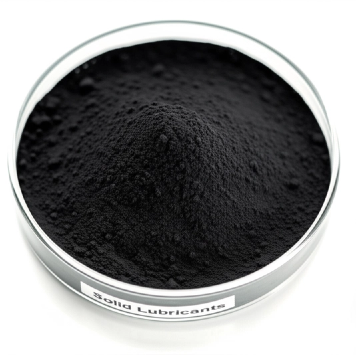
Solid lubricants, often based on naturally occurring materials such as graphite, molybdenum disulfide (MoS₂), or advanced synthetic polymers, typically require less energy-intensive processing. Moreover, their application as thin coatings or powders means less raw material usage overall.
At end of life, solid lubricants do not require complex disposal procedures. Their minimal waste generation and inert nature reduce environmental hazards compared to spent oils and greases.
The risk of environmental accidents is inherently lower with solid lubricants due to their stable, non-liquid state. For example, oil spills in marine or terrestrial environments can cause long-term ecological damage, affecting wildlife and human communities. Solid lubricants do not pose such risks, making them ideal for use in environmentally sensitive areas.
Handling and exposure to liquid lubricants can pose health risks to workers due to skin contact, inhalation of fumes, or accidental spills. Solid lubricants reduce these risks by eliminating liquid exposure and VOC emissions, promoting safer working conditions.
4.1 Aerospace Industry
In the aerospace sector, solid lubricants have been instrumental in addressing the environmental and technical challenges associated with space exploration. Traditional oils and greases are unsuitable for the vacuum and extreme temperature conditions encountered in space. When used in high-vacuum environments such as satellites or spacecraft, fluid lubricants tend to outgas, releasing vapors that can contaminate optical sensors, solar panels, and other delicate components. By switching to solid lubricants like MoS₂ and graphite, engineers have effectively eliminated the risk of contamination while significantly enhancing the reliability of space systems. This has reduced the frequency of satellite failure, lowered maintenance demands, and contributed to a more sustainable and cost-effective aerospace industry.
4.2 Automotive Manufacturing
Modern automotive manufacturing is also seeing a shift toward solid lubricant technologies. Components such as piston rings, valve trains, and gears are increasingly being treated with solid lubricant coatings to reduce friction and wear. This allows engines to operate more efficiently, leading to lower fuel consumption and significantly reduced greenhouse gas emissions. Furthermore, the use of solid lubricants extends component life and reduces the need for traditional oil changes, thus decreasing the generation of hazardous waste oils.
4.3 Cleanroom and Semiconductor Production
In environments like cleanrooms and semiconductor fabs, where even microscopic contamination can compromise product integrity, solid lubricants offer a vital advantage. Unlike oil-based systems, solid lubricants produce no vapor or droplet emissions, maintaining air purity and reducing the need for solvent-based cleaning. This helps manufacturers reduce chemical waste and environmental pollutants while upholding stringent production standards.
The push for greener lubricants has led to research into biodegradable solid lubricants made from renewable, natural polymers and materials. These lubricants break down harmlessly in the environment, offering sustainable options for industries seeking to minimize their ecological footprint.
Examples include solid lubricants based on cellulose derivatives or bio-based waxes, which can replace synthetic polymers in certain applications without compromising performance.
Emerging solid lubricants prioritize low toxicity to humans and ecosystems. Materials such as hexagonal boron nitride (h-BN) and certain forms of DLC coatings have been demonstrated to be chemically inert and non-toxic, making them suitable for food processing, pharmaceutical, and medical applications.
Manufacturers are increasingly adopting eco-friendly production processes for solid lubricants, such as solvent-free coating techniques, energy-efficient deposition methods, and waste minimization strategies, further enhancing their green credentials.
As environmental regulations tighten and sustainability becomes a global priority, solid lubricants provide a cleaner, more efficient alternative to traditional oils and greases. With no VOC emissions, minimal leakage, and extended service life, they help reduce energy consumption, contamination, and hazardous waste.
For companies seeking eco-friendly lubrication solutions, Dongying City Dayong Petroleum Additives Co., Ltd. offers advanced solid lubricants designed to meet both performance and sustainability goals. Backed by innovation and technical expertise, Dayong supports industries in achieving greener, more efficient operations. Visit their website or contact their team to learn more about sustainable lubrication options tailored to your needs.

